Follow Me On Social Media!

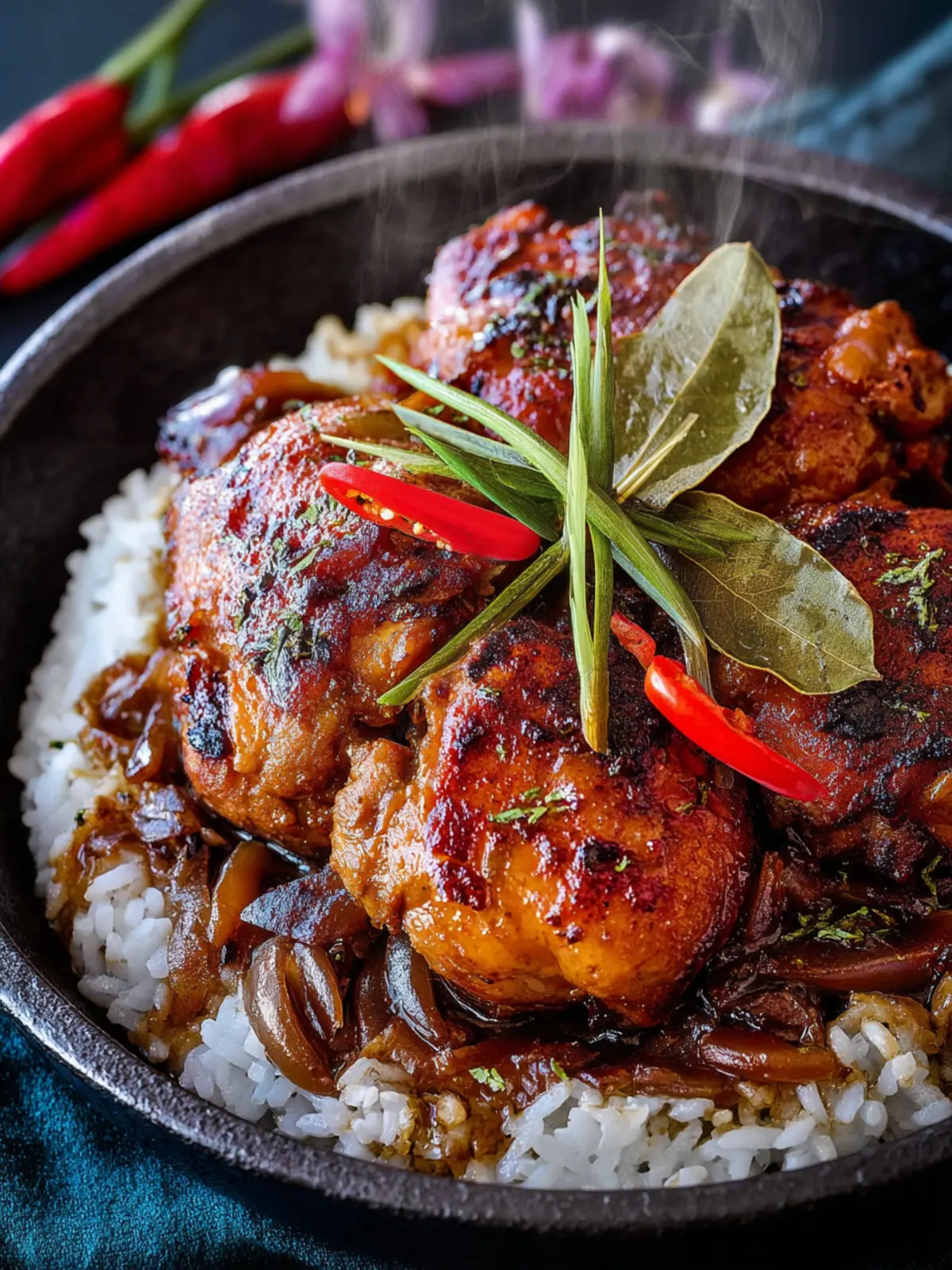
Chicken Adobo: The Juicy Comfort Food You’ll Crave Again!

Introduction to Chicken Adobo
Chicken Adobo is not just a dish; it’s a culinary expression that tells the rich and vibrant story of Filipino culture. Imagine the tantalizing aroma of marinated chicken simmering in a savory blend of soy sauce, vinegar, and spices filling your kitchen. As you take a bite, the melding of flavors transports you straight to the heart of the Philippines, where this dish has been a staple for generations. Its simplicity coupled with complex flavors makes it an easy favorite for anyone looking to explore new tastes.
Nestled among the various traditional dishes of the Philippines, chicken adobo holds a special place, symbolizing the resourcefulness of Filipino families. The dish utilizes key ingredients that are often staples in households, transforming them into something extraordinary through the process of slow cooking and marination. It’s said that every family has their own recipe, passed down through the years, which makes chicken adobo a dish of personal significance, nostalgia, and love.
What is Chicken Adobo and Its Cultural Significance?
Chicken adobo is a savory stew that combines chicken, vinegar, soy sauce, garlic, bay leaves, and peppercorns, creating a flavorful harmony that delights the palate. The dish has Spanish influences, introduced during the colonial era, but it is uniquely Filipino in its execution and ingredients. The method of cooking—marinating and then simmering—reflects the Filipino philosophy of infusing flavors over time, often leading to enhanced depth and richness.
The cultural significance of chicken adobo extends beyond its delicious flavor; it represents the history and traditions of the Philippines. Families often gather around the table to share this beloved dish, and its preparation is a communal activity that strengthens bonds and creates lasting memories. Whether served on special occasions or during everyday meals, chicken adobo is a reminder of home, comfort, and the simple joys of sharing a meal with loved ones.
As you embark on creating your own chicken adobo, remember that this dish is more than just a recipe—it’s an invitation to experience the warmth and hospitality of Filipino culture. Perfectly seasoned and simmered, chicken adobo is sure to become a cherished part of your culinary journey.
Key Ingredients for Chicken Adobo
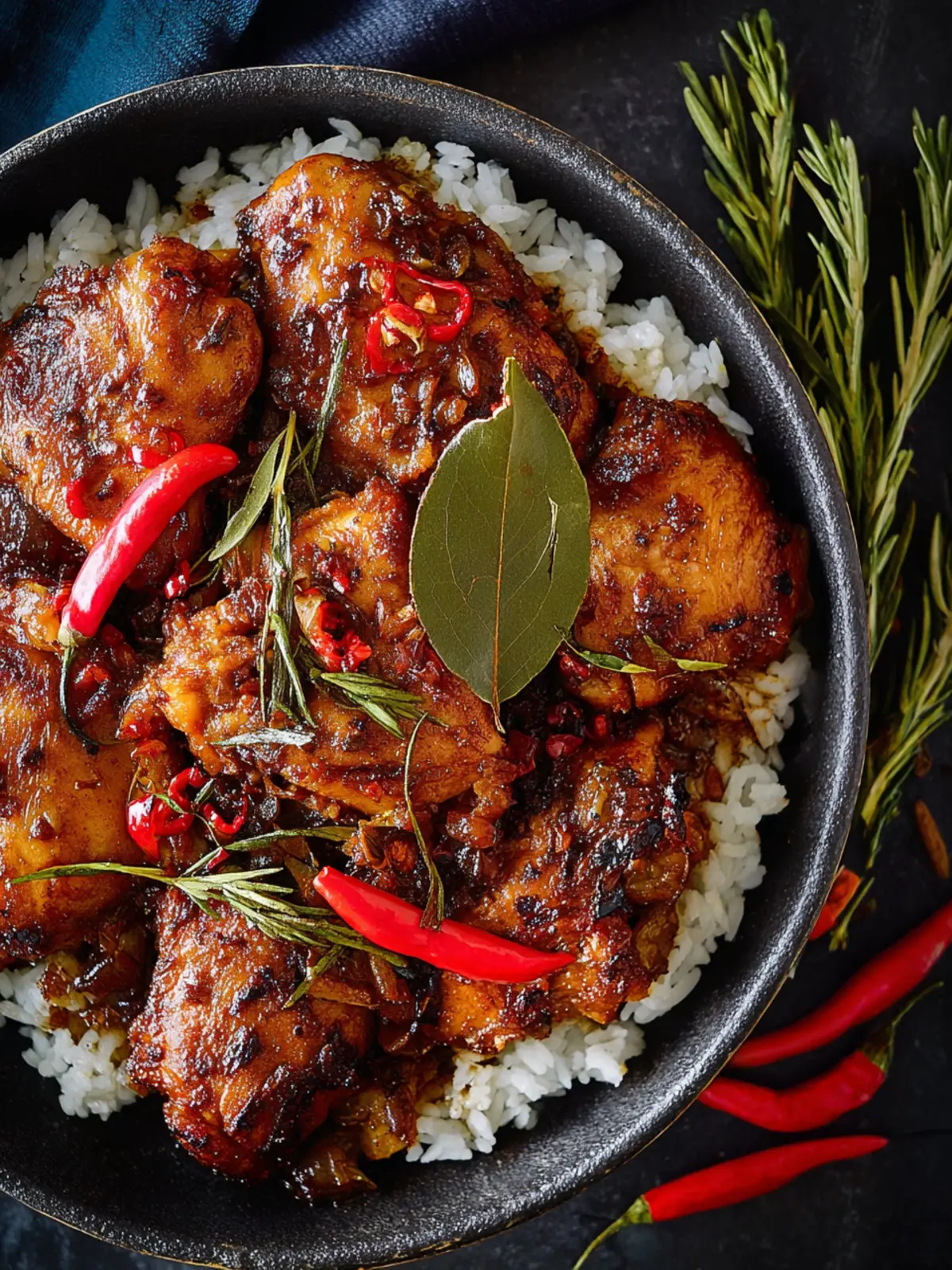
Chicken: The star of any Chicken Adobo recipe is, of course, the chicken itself. I prefer using bone-in, skin-on thighs for their tenderness and rich flavor. They soak up the marinade beautifully, enhancing each bite with that iconic savory goodness. If you have a preference for breast meat or a leaner cut, feel free to substitute, though the texture might differ slightly.
Soy Sauce: This is the backbone of the marinade. I recommend opting for a good-quality soy sauce, as it adds depth and umami that truly defines the dish. The balance of salty and savory flavors from soy sauce is essential for authentic Chicken Adobo.
Vinegar: Traditionally, cane vinegar or rice vinegar works best. It provides the characteristic tanginess that balances the richness of the soy sauce. Trust me; don’t skip this ingredient, as it creates that heavenly flavor harmony.
Garlic: Fresh garlic cloves add an aromatic punch. Crushing them releases essential oils, enhancing the overall aroma of the dish. The garlic flavor meshes perfectly with the soy and vinegar.
Bay Leaves: These aromatic leaves infuse the Chicken Adobo with a subtle, earthy flavor. They’re a must-have for that layered complexity, making every bite a delight.
Peppercorns: Whole peppercorns bring a warm spiciness that rounds out the profile. The gentle heat complements the other ingredients without overpowering them.
Why You’ll Love This Chicken Adobo Recipe
Chicken adobo is the heart and soul of Filipino cuisine, and this recipe brings its rich history into your kitchen. Imagine tender chicken thighs simmered in a savory blend of soy sauce, vinegar, and garlic, all coming together to create a dish that embodies both comfort and celebration at the same time.
The magic begins with simple ingredients that transform into a symphony of flavors. You’ll love the ease of preparation, making it accessible even on a busy weeknight. Here’s why this chicken adobo recipe will undoubtedly become one of your favorites:
-
Complex Flavors: The combination of soy sauce and vinegar creates a delightful balance of salty and tangy notes, while garlic adds an aromatic touch that’s impossible to resist.
-
Versatility: This dish pairs beautifully with rice, and the sauce is so delicious that you’ll want to soak everything in it. You can easily adapt the recipe with different proteins or even vegetables for a personalized touch.
-
Family Tradition: Many families have their own spin on chicken adobo, making it a cultural dish that fosters connection. Sharing a meal rich in tradition brings everyone closer.
Try this chicken adobo recipe, and let it warm your heart and home. It’s more than just a meal; it’s a journey into delicious familiarity.
Variations to Try with Chicken Adobo
Exploring the world of Chicken Adobo opens endless culinary possibilities! While the classic version boasts a blend of savory, tangy, and slightly sweet flavors, there are many creative ways to put your unique spin on this beloved dish.
Adding Heat
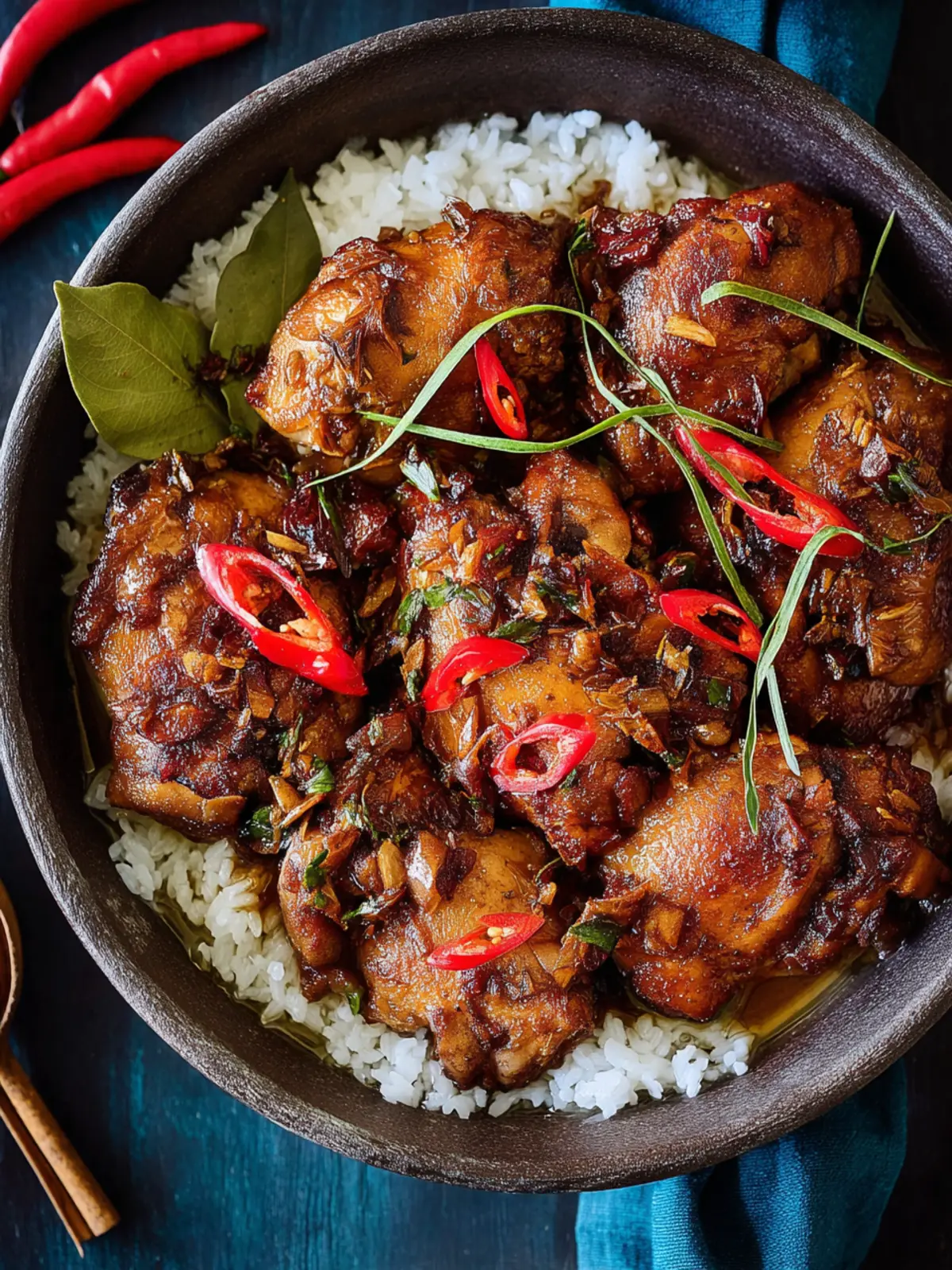
For spice enthusiasts, incorporating chili peppers can elevate your Chicken Adobo to new levels. Try adding chopped jalapeños or Hawaiian chili peppers to give your adobo a fiery kick.
A Touch of Sweetness
If you love a hint of sweetness, consider including pineapple chunks or a dash of sugar to balance the acidity of the vinegar. This variation brings an unexpected tropical element that many find delightful.
Experiment with Different Proteins
While chicken is the star of this recipe, don’t shy away from mixing it up. Switching to pork or even tofu for a vegetarian take can yield fantastic results. Each protein absorbs the flavors of the marinade differently, creating a new experience with every bite.
Infuse with Citrus
Incorporating citrus fruits like oranges or calamansi can brighten your Chicken Adobo. Their zesty essence pairs beautifully with the vinegar and soy sauce, adding a refreshing twist.
Additional Herbs and Spices
Beyond traditional bay leaves, try bay, oregano, or even lemongrass for a fragrant twist. Each herb introduces a distinct aroma and flavor profile, making your Chicken Adobo truly one of a kind.
In each variation, remember that the heart of Chicken Adobo lies in its ability to embrace your personal taste—so don’t hesitate to get creative!
Cooking Tips and Notes for Chicken Adobo
When it comes to elevating your chicken adobo cooking experience, a few thoughtful tips can make all the difference. This dish is not just a meal; it’s a beautiful blend of flavors that tells a story of tradition and love.
Choosing Your Chicken
For the best chicken adobo, opt for bone-in, skin-on cuts like thighs or drumsticks. These pieces become wonderfully tender and juicy as they absorb the rich marinade. If you’re watching your fat intake, skinless chicken works too, though the end result will vary a bit in flavor.
The Pot Matters
Using a heavy-bottomed pot or Dutch oven is key. This helps ensure even cooking and prevents burning. Remember, slow simmering is your best friend here—allowing the chicken to tenderize fully while the flavors meld beautifully.
Balance the Flavor
Taste your marinade before adding the chicken. If it’s too acidic, a dash of sugar can help balance it out. Some prefer their chicken adobo on the tangy side, while others lean towards a more savory taste. Adjusting the vinegar and soy sauce to your liking is essential for the best experience.
Let It Rest
After cooking, let your chicken adobo sit for a few minutes before serving. This resting period allows the meat to reabsorb its juices, creating a more flavorful, satisfying dish.
With these tips in hand, you’re on your way to mastering chicken adobo, creating a dish that not only nourishes but also connects you to the rich tapestry of its cultural heritage.
Serving Suggestions for Chicken Adobo
When you’re enjoying chicken adobo, transforming a simple dinner into a delightful feast is easy with the right pairings. This beloved Filipino dish, known for its rich, tangy flavors, shines when served with the perfect accompaniments.
Classic Rice
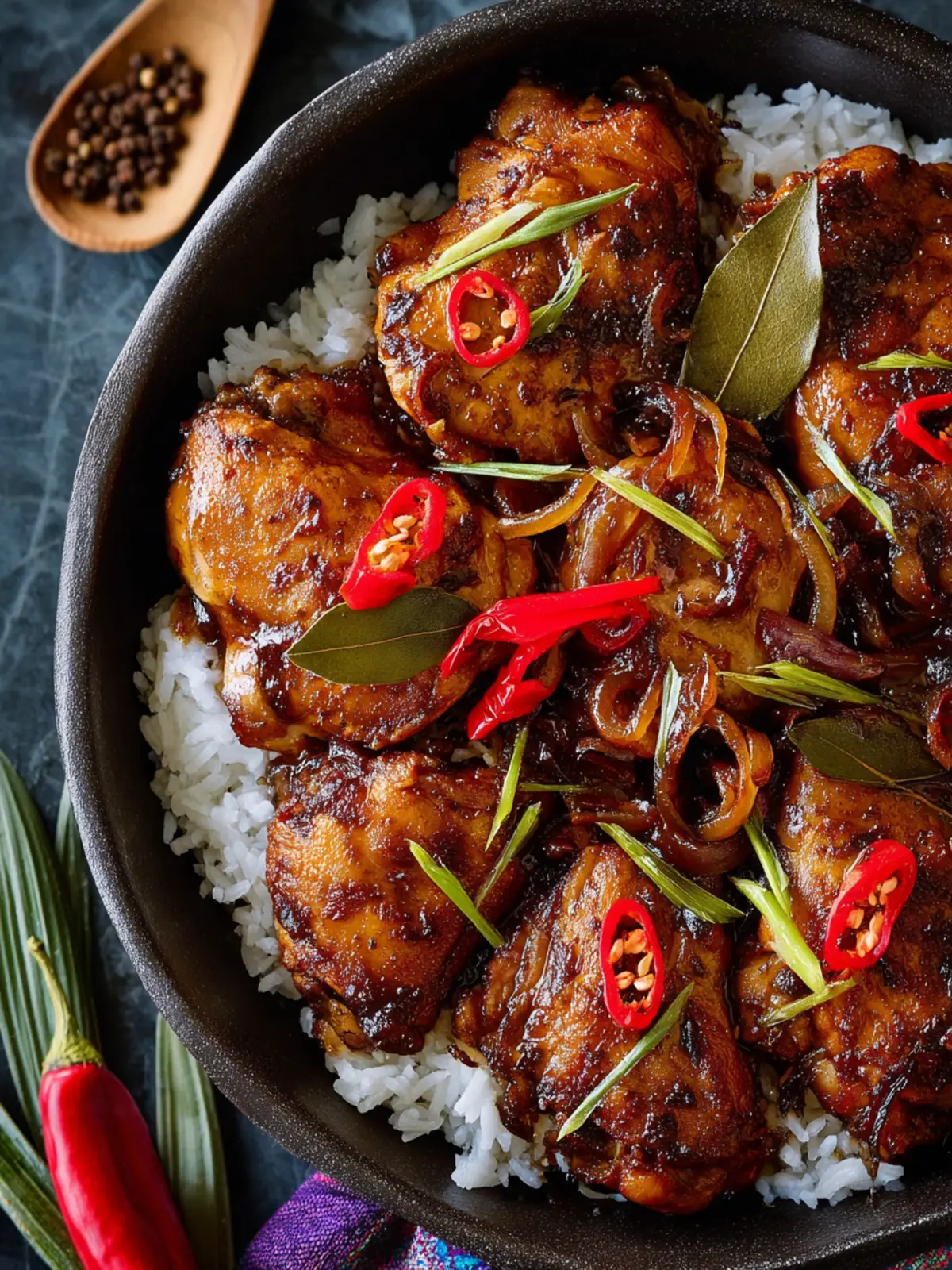
A bowl of fluffy white rice is the go-to favorite. The neutral taste absorbs the savory sauce beautifully, ensuring not a drop goes to waste. For some flair, try coconut rice to add a subtle sweetness that complements the adobo’s umami notes.
Side Vegetables
Chicken adobo pairs wonderfully with sautéed or steamed greens like bok choy or green beans. Toss them in garlic and a dash of soy sauce for additional flavor. These veggies add a refreshing crunch and a burst of color to your plate.
Refreshing Salads
Consider a crisp cucumber and tomato salad. The bright acidity balances the dish, cutting through the richness of the sauce. A drizzle of lime or vinegar elevates the freshness to match the bold flavors of your adobo.
Flavorful Dipping Sauces
A small bowl of vinegar mix (perhaps with diced chili) can be a delightful addition for those who enjoy an extra kick. It’s a common practice in Filipino cuisine to dip bites of marinated meat for added zest.
These serving suggestions can elevate your chicken adobo, making it a memorable meal every time!
Time Breakdown for Cooking Chicken Adobo
Cooking chicken adobo is not only a rewarding experience but also a delicious way to bring Filipino cuisine into your home. If you plan your time well, you’ll have this savory dish on the table in no time!
Preparation Time
Getting everything ready for chicken adobo takes about 15 minutes. This includes chopping the garlic, slicing the onions, and marinating the chicken. It might feel like a quick task, but the prep is essential for the flavors to meld beautifully.
Cooking Time
Once you start cooking, the actual time for simmering your chicken adobo is roughly 40 minutes. Patience during this phase is key, as this is when the chicken absorbs the rich vinegar and soy sauce blend, enhancing its tenderness and flavor.
Total Time
In total, expect around 55 minutes to serve your chicken adobo. Including the preparation, cooking, and a little time for letting those flavors mingle, you’ll have a tasty dish perfect for any occasion. Enjoy the journey to a fantastic meal!
Nutritional Facts for Chicken Adobo
When it comes to the beloved Chicken Adobo, understanding its nutritional profile can enrich your experience with this classic dish. As you savor those bold flavors, knowing what’s on your plate can help you make healthier choices without sacrificing taste.
Calories
A serving of Chicken Adobo typically contains around 350-400 calories, depending on the method of preparation and the specific ingredients you choose. This makes it a satisfying option for lunch or dinner, without derailing your daily caloric goals.
Protein
Packed with protein, Chicken Adobo boasts about 30 grams per serving. This high protein content is not only essential for muscle repair and maintenance but also keeps you feeling full longer, making it an excellent dish for active, young professionals.
Fiber
While the primary focus of Chicken Adobo is on its flavorful chicken, pairing it with sides such as brown rice or vegetables can enhance its fiber content. A balanced meal can easily provide 3-4 grams of fiber, contributing to healthy digestion.
Incorporating Chicken Adobo into your meal plan adds both vibrant taste and essential nutrients, making it a fantastic addition to your culinary repertoire.
FAQs about Chicken Adobo
When diving into the delightful world of chicken adobo, questions often arise about how to perfect this beloved dish. Whether you’re a kitchen novice or a culinary enthusiast, these FAQs will help you navigate your way through this delicious recipe.
How do I make Chicken Adobo less salty?
One common concern about chicken adobo is its saltiness, primarily due to soy sauce. If you find your dish a bit too salty, here are some tips to balance it out:
- Dilute with Water or Broth: Adding a bit of water or unsalted chicken broth can mellow out the saltiness.
- Add More Chicken: Incorporating additional chicken or other proteins will absorb some of the salty flavors and yield more sauce.
- Incorporate Sugar: A pinch of sugar can help counterbalance the salt without overpowering other flavors.
- Include Vegetables: Sautéing some veggies like potatoes or carrots in your adobo can soak up excess salt while adding a nutritious touch.
Can I use other types of meat for this recipe?
Absolutely! While chicken adobo is traditionally made with chicken, this dish is quite versatile:
- Pork: Pork adobo is another popular variant, and it tends to have a richer flavor.
- Beef: For a heartier meal, beef chunks can be used, but simmer them longer for tenderness.
- Fish or Tofu: For a lighter take, consider using fish like tilapia or tofu as a plant-based option.
What side dishes pair well with Chicken Adobo?
Pairing sides with your chicken adobo can enhance the overall experience. Here are some classic options:
- Steamed Rice: The simplest and most common accompaniment, perfect for soaking up the savory sauce.
- Fried Plantains: Their sweetness complements the salty adobo beautifully.
- Vegetable Stir-fry: Bright vegetables can provide a fresh contrast to the rich flavors of the adobo.
These combinations not only create a balanced meal but also elevate your dining experience, making every bite a joy!
Conclusion on Cooking Chicken Adobo
Cooking chicken adobo is not just about following a recipe; it’s about creating a dish rich in flavors and stories. Whether you’re making it for a cozy night in or a gathering with friends, the mingling of soy sauce, vinegar, and aromatic spices fills your kitchen with a heartwarming aroma that promises comfort. Remember that patience is key; allowing the chicken to marinate enhances its flavor profile.
This Filipino classic is versatile, effortlessly blending with rice or enjoying on its own. So grab your ingredients, gather your loved ones, and treat yourself to a vibrant plate of chicken adobo that’s sure to spark joy at the dinner table.
Print
Soy Sauce Chicken Thighs
- Total Time: 1 hour 35 minutes
- Yield: 4 servings 1x
- Diet: Gluten-free
Description
Delicious soy sauce chicken thighs marinated in a flavorful blend of ingredients.
Ingredients
Scale
- 1 1/2 pounds chicken thighs, skinless and boneless
- 1/4 cup white vinegar
- 1/4 cup soy sauce
- 6 garlic cloves, crushed or finely minced
- 3 bay leaves
- 1 teaspoon black peppercorns or 1/2 teaspoon coarse ground pepper
- 1 tablespoon maple syrup or use brown sugar or coconut sugar
- 1 Fresno chili pepper or jalapeño, sliced thin or use pepper flakes
- 2 green onions, sliced for garnish
Instructions
- In a shallow bowl mix together vinegar, soy sauce, garlic, bay leaves, peppercorns, and maple syrup. Add chicken and let marinate for 1-3 hours.
- Drain the chicken, reserving the marinade. Heat up a pan with just enough oil to coat the bottom, brown the chicken in the hot pan about 3 minutes per side.
- Add the reserved marinade back into the pan. If using a chili pepper, add that in. Simmer the chicken in marinade uncovered until it almost completely reduces, about 15-20 minutes, more if needed. The chicken will be dark and glazed.
- Serve with green onions.
Notes
- For extra heat, use more chili pepper or add red pepper flakes.
- Allowing the chicken to marinate longer enhances the flavor.
- Prep Time: 15 minutes
- Cook Time: 20 minutes
- Category: Main Dish
- Method: Pan-fry
- Cuisine: Asian
Nutrition
- Serving Size: 1 thigh
- Calories: 320
- Sugar: 3g
- Sodium: 800mg
- Fat: 17g
- Saturated Fat: 4g
- Unsaturated Fat: 12g
- Trans Fat: 0g
- Carbohydrates: 8g
- Fiber: 0g
- Protein: 35g
- Cholesterol: 120mg